
Table of Contents
Why We Blame the People Sinking Instead of the Ones Who Capsized the Boat
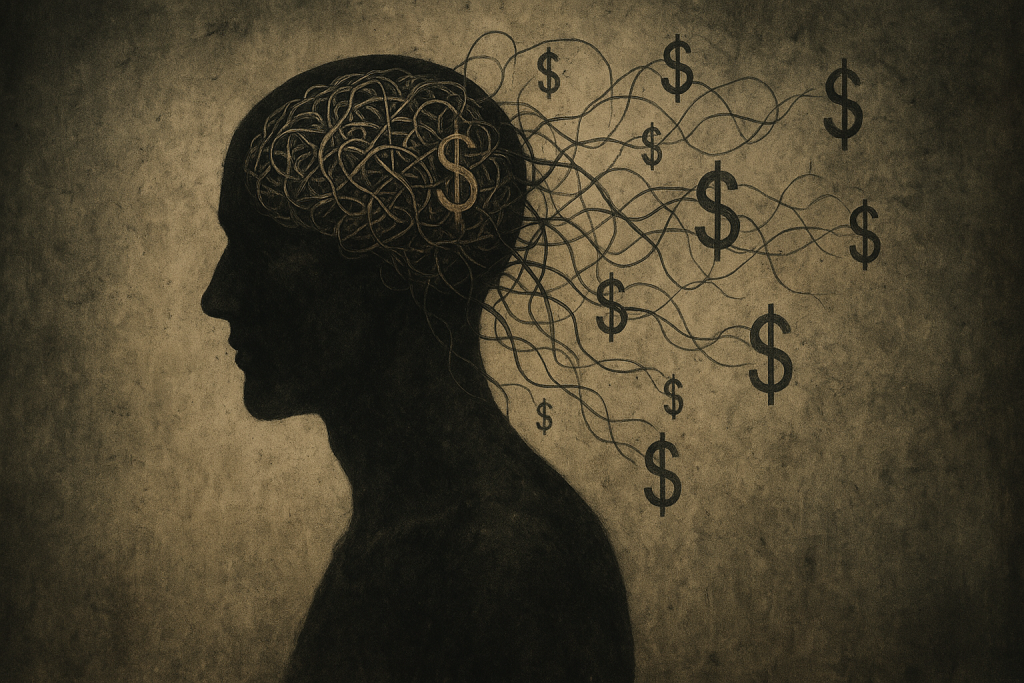
What if greed isn’t simply a moral failure or a character flaw but part of a broader psychological pattern tied to insecurity and addiction-like behaviors?
We treat greed as if people willingly choose it — as if it’s a simple matter of values or ethics. But what if greed behaves much more like a compulsion, a sickness in our systems rather than just the souls of individuals?
Greed acts less like an ethical decision and more like an obsession — a pattern that research on the greed personality trait and its link to psychopathology has repeatedly confirmed (PMC: Psychopathology & Greed).
People who score high in trait-greed often show more aggression, lower emotional well-being, and a constant hunger for more, no matter how much they already have — findings backed by multiple studies comparing high vs low dispositional greed (PMC review).
That’s not “ambition.”
That’s pathology.
And yet—we don’t treat it that way.
Psychology Is Treating Symptoms While Ignoring the Disease
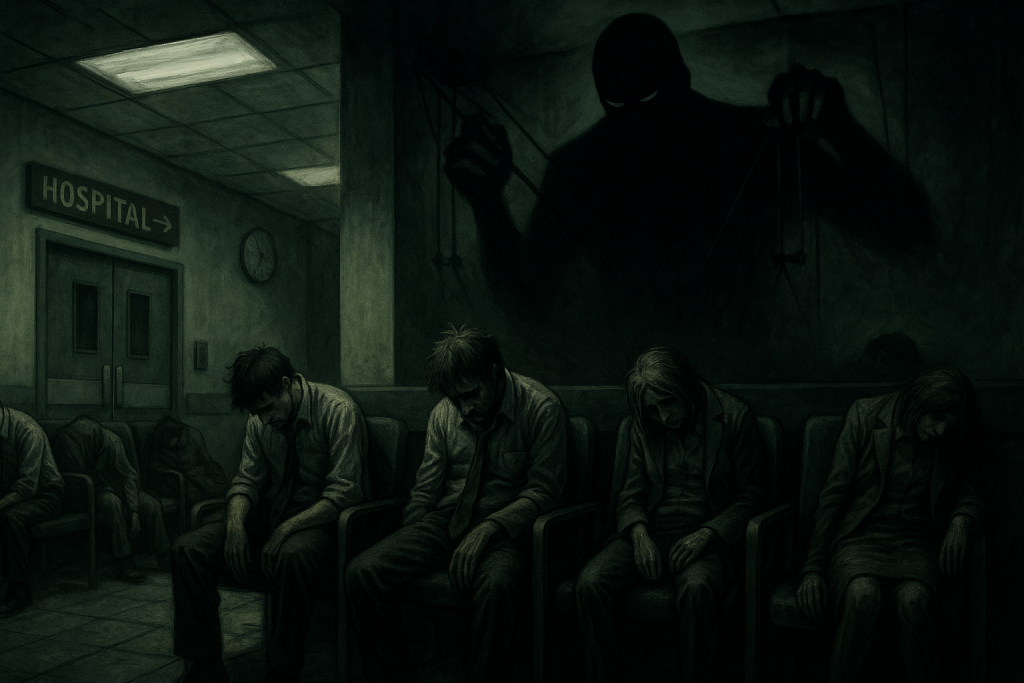
While psychologists and therapists are busy treating symptoms, the system creating the harm gets a free pass — even though many scholars argue that capitalism itself is harming collective mental health (Truthout — Greed as Mental Disorder).
We diagnose the responses to greed (anxiety, burnout, depression), but not the greed itself — even though therapists have begun comparing greed to addiction (Talkspace Psychology of Greed).
We analyze the damage but ignore the architects.
The people who design these systems face no scrutiny, even though decades of research — including the work summarized in Brian Klaas’s Corruptible — shows that individuals who rise to power often display predictable traits of manipulation, extraction, and control.
(Brian Klaas — Corruptible)
If the people pulling the levers operate from a place of psychological emptiness or addiction-like greed, then the suffering that follows is not a glitch — it’s a feature.
The Blame Game Is Rigged
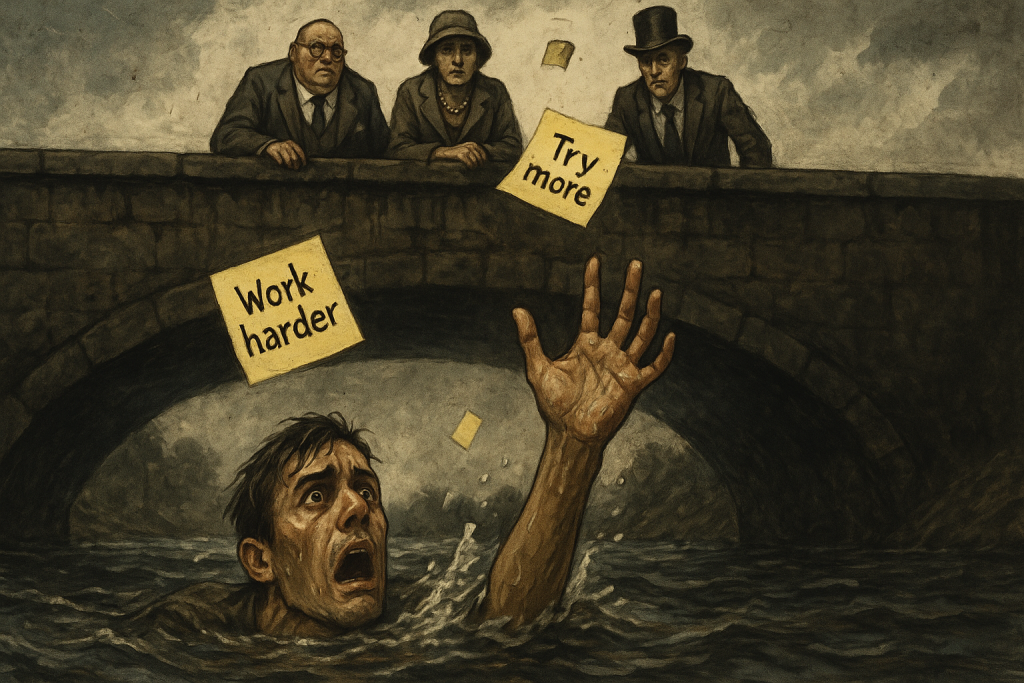
When people struggle with housing, mental health, or basic stability, the system blames them — even though research shows that housing instability directly increases depression, stress, and long-term harm (American Psychiatric Association).
We blame individuals for drowning in the rapids when it was the river engineers who created the dangerous conditions.
People fall through the cracks because the cracks are engineered — and public-health research confirms the link between homelessness and severe psychological outcomes (National Alliance on Mental Illness).
None of this is a mystery.
It’s just inconvenient for those benefiting from the status quo.
We’ve normalized a level of harm that should never be acceptable, especially when studies show that less affordable housing measurably reduces psychological well-being (Journal of Urban Health study).
When rent spikes, depression spikes.
When housing disappears, hope disappears.
When systems collapse, individuals are told to “work harder.”
If that’s not cruelty disguised as advice, I don’t know what is.
So What If We’ve Been Treating the Wrong Problem?
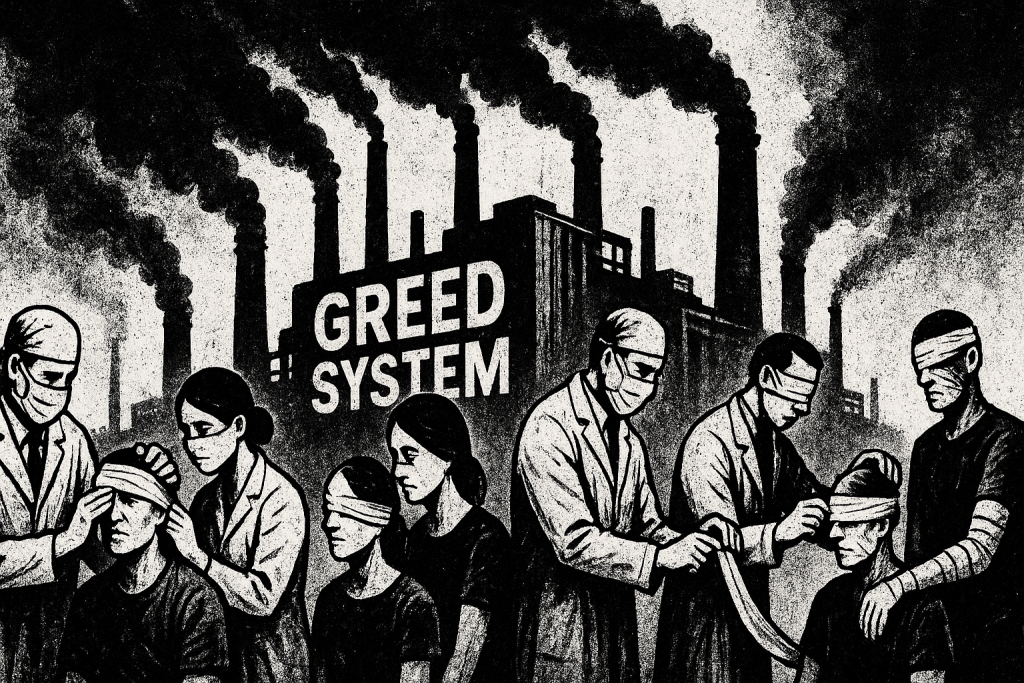
What if we began to see systemic greed not as an inevitability but as a treatable pattern, a conversation already happening among researchers debating whether greed itself is a mental-health disorder (Greed as Mental Illness — Why We Suffer).
What if the people who build extractive systems aren’t “high achievers” but individuals acting out untreated psychological wounds — and the rest of us are living in the consequences?
What if the sickness isn’t in the people falling behind…
but in the people racing ahead and calling it progress?
What if the problem isn’t that people are weak…
but that the system is built on the pathology of those who need more, no matter the cost — a pattern some researchers connect to neural differences in risk-taking (Scientific Reports: neural basis of greed).
If greed is a sickness, then the solution isn’t to blame the people suffering — it’s to challenge the people causing the suffering.
And maybe…
just maybe…
naming the sickness is the first step toward healing the world it’s destroying.
You might want to read these articles as well.
- 5 Brutal Truths About Why We Talk to AI Instead of Each Other
- It’s Not in Your Head: The Real Story Behind Shrinkflation and Why You’re Paying More for Less
- The Financial Muzzle: Why Healthcare Experts Don’t Speak Out Against a Harmful System
- Why Your HOA Hates Your Solar Panels (And What It Says About America)
- What I Learned as a Raft Guide. The Bootstrap Myth No One Talks About
